ADA Mobile Bathroom Rental: Meeting Available Layout Specifications
When individuals consider restroom services, they typically focus on amount, shipment timing, and placement. Availability obtains dealt with like a box to examine at the end. That is where problems start.
An ADA mobile bathroom is not a politeness upgrade or a great extra for one visitor who may need it. It is part of whether a site, event, or public-facing configuration works for actual people. If a person shows up and can not reach the system, can not enter it, or can not utilize the area as soon as inside, the presence of a restroom theoretically does not help much. The issue is not only lawful compliance. It is dignity, self-reliance, and whether the experience was intended with care.
That is why ADA portable toilet leasing decisions are entitled to even more interest than they typically obtain. The standard is not just, "Order one larger unit and you are done." The federal framework that manages ease of access below is the 2010 ADA Criteria for Accessible Design, as interpreted by the Accessibility Board and the Division of Justice. For mobile restroom rentals used by the public, those criteria matter in the details: the number of available devices are called for, where they are placed, whether there is an easily accessible route, and whether the system itself meets the technological requirements for an accessible toilet room.
A lot of headaches can be stayed clear of by understanding those basics prior to the truck reveals up.
Accessibility starts prior to the toilet arrives
One of one of the most common blunders in the area is dealing with the portable bathroom itself as the only thing that matters. In method, an ada accessible portable bathroom can be flawlessly suitable in layout and still fall short the user if the course to it is sloppy, sloped, obstructed, or disconnected from the remainder of the site.
The standards require an obtainable route and entryway. If a ramp or touchdown is required, that element has to likewise adhere to ADA technical demands. That is where lots of well-meaning arrangements fail. Someone orders an ada compliant portable toilet, after that positions it on uneven ground behind an aesthetic, or at the end of a course made hard by loosened gravel, pipes, fence, or short-lived barricades. The device exists, however access does not.
This comes up commonly at outside weddings, street celebrations, institution features, and emergency action configurations. The impulse is to place bathroom financial institutions wherever there is extra area. From a procedures viewpoint, that can seem efficient. From an ease of access viewpoint, it can create a dead end. The path needs to be thought about from the exact same beginning point as any various other guest or site visitor, not envisioned in isolation.
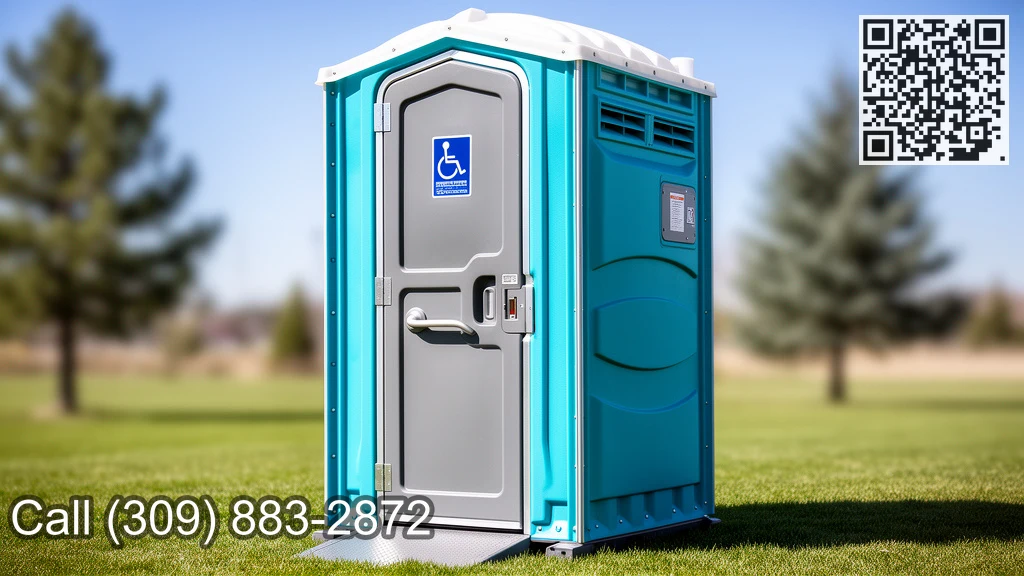
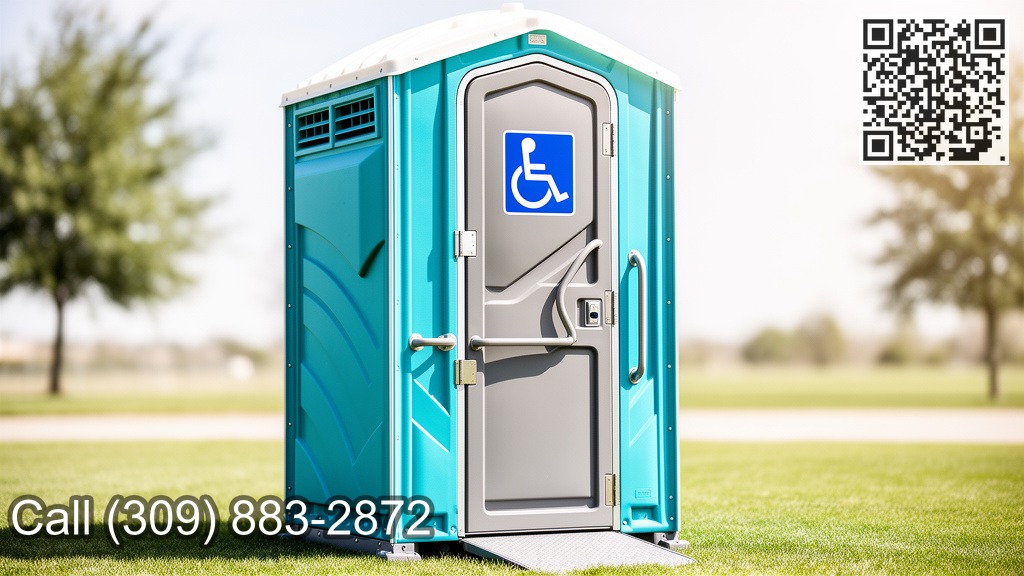
The various other factor individuals miss is exposure. Obtainable systems have to be understood the International Symbol of Ease Of Access. That seems easy, yet it matters a lot in busy environments. If a person has to look a congested washroom area and assumption which system is useful, the site plan has already made the experience harder than it needed to be.
The 5 percent guideline is the location to begin
For collections of mobile single-user toilet devices, at least 5 percent of the systems in each cluster need to be accessible. The Access Board has actually explained that this applies also at short-term events. That implies a public occasion can not prevent availability obligations even if it is short-term.
This is among those guidelines that sounds straightforward until individuals begin intending multiple restroom zones. The phrase "in each cluster" issues. If you have mobile units grouped in several areas throughout a site, accessibility needs to be thought about in each team, not just someplace on the home in general. A solitary ada mobile toilet at the front gate does not resolve for a second restroom collection on the far side of the venue.
That point ends up being specifically important on big grounds where individuals spread out. Consider fairgrounds, athletic tournaments, performances in parks, or area festivals that run a number of blocks. A planner might really feel assured since an ada portable restroom has actually been rented. Yet if that system is just present in one location while other bathroom clusters stay unattainable, the customer experience is still unequal and exclusionary.
In my experience, this is where rental conversations need to come to be very concrete very early. Ask the company to go over washroom groupings, not just complete device matter. The question is not "Do we have an obtainable device?" The far better inquiry is "Does each cluster fulfill the easily accessible unit requirement, and can an individual in fact get to it and utilize it?"
What makes an accessible portable washroom really usable
People often use the phrases ada certified easily accessible mobile toilets and ada-compliant mobile washrooms loosely, however the standards behind them are not obscure. An obtainable portable commode unit need to fulfill toilet-room technical requirements, including fixture clearances, transforming room, and door maneuvering clearances, in addition to suitable grab bar and water storage room clearance rules.
That is a more purposeful summary than "oversized unit," which is how many consumers consider it. Bigger is not the same as available. Extra interior width alone does not inform you whether the format works. The method the door runs, the maneuvering room, the turning area, and the connection of the commode and order bars all matter.
This is why experienced buyers do not rely on look or advertising and marketing language alone. A vendor may explain stock as available, but the genuine issue is whether the system straightens with the ADA technical demands that use. If the configuration is public-facing, that difference matters.
It likewise matters for individual comfort in a really human way. Somebody making use of wheelchair devices does not experience room as an abstract dimension. They experience whether they can go into without strain, close the door without contorting, place themselves safely, and leave without feeling caught. The requirements are technological because actual use is physical.
Placement can spoil a compliant unit
A shocking variety of accessibility issues have absolutely nothing to do with the bathroom design itself. They take place during placement.
I have actually seen planners placed an ada handicap accessible portable bathroom beside a site to "offer it even more area," just to separate it from the major restroom collection and the natural pedestrian path. I have actually seen devices placed in soft ground that altered after rainfall. I have actually seen accessibility narrowed by short-term secure fencing included after delivery. None of those scenarios call for bad intent. They originate from fragmented preparation, where the restroom vendor, site manager, and occasion team make decisions in sequence as opposed to together.
For that reason, the most helpful ease of access discussions typically occur on a map initially and on the ground second. Prior to shipment, a person ought to identify where each collection will certainly go, how participants will approach it, and whether the method remains available under actual event problems. Then, after placement, somebody must literally examine the route and entrance once again. Temporary websites alter swiftly. A course that looked clear during setup can end up being obstructed as soon as generators, coolers, barriers, signs, hosting, or supply pallets arrive.
This is also where compassion makes a distinction. If you walk the website as an able-bodied organizer moving rapidly, numerous barriers really feel small. If you reduce and imagine showing up with a wheelchair, pedestrian, walking stick, or equilibrium restriction, the website checks out differently. A little lip issues. A high change issues. A jampacked technique issues. Ease of access is commonly won or shed in those "tiny" conditions.
Construction websites are a grandfather clause, but only a certain one
There is an essential distinction in the criteria that often gets misunderstood. Portable toilet systems at building and construction websites used specifically by building and construction employees are discriminated under the portable-toilet accessibility scoping requirement referenced in the 1991 standard. People often hear a simplified version of this and think construction-related arrangements are generally exempt. That is also loosened and can lead to bad decisions.
The essential phrase is made use of solely by building employees. That is narrower than many individuals think. If a mobile toilet rental serves the public, or a broader team outside that exclusive usage context, the accessible-unit requirement remains relevant.
This matters on mixed-use sites, redevelopment jobs, public works events, grand openings, and community-facing building and construction areas. If the washroom configuration touches site visitors, customers, residents, or members of the public, you need to not casually think the construction-site exemption applies. That presumption can produce a compliance space and, equally as vital, can leave a real person without access.
Temporary does not mean optional
One of one of the most relentless myths in event planning is that short duration lowers the ease of access bar. It does not. The Access Board's position that the 5 percent rule applies also at short-lived occasions responds to that plainly.
That can be a tough message for organizers collaborating with tight footprints, quick arrangement windows, and split vendor routines. Short-lived events are messy by nature. A street fair that rises overnight does not have the predictability of a permanent structure. But that functional challenge does not eliminate the need for easily accessible washrooms, obtainable routes, and correct identification.
In fact, short-term setups usually should have much more alertness because they are more probable to move under pressure. A long-term washroom is fixed in position and assessed over time. A bank of ada certified mobile toilets at a weekend break event can be rearranged late, approached in different ways than intended, or hemmed in by crowd-control choices made hours prior to opening up. The momentary nature of the arrangement is specifically why mindful checks matter.
I have actually discovered that coordinators that do this well often tend to treat ease of access as a procedures problem, not a lawful footnote. They designate somebody to possess it during setup, not simply during purchase. That a person adjustment catches an unusual number of avoidable problems.
Questions worth asking before you authorize the rental order
If you are organizing ada portable bathroom service for a public event or website, a few straight inquiries can save time, stress, and last-minute scrambling.
- For each toilet cluster, the amount of systems are prepared, and the number of accessible systems are included?
- Will each easily accessible device be understood the International Symbol of Accessibility?
- What is the organized available path to each device, and does the entryway stay obtainable after placement?
- If ramps or landings are required, just how will certainly those be handled to meet ADA technical requirements?
- Has a person assessed the last website format for door navigating space and unhampered approach?
Those concerns are not adversarial. Great vendors and organized website teams must invite them. They aid move the discussion from vague assurance to practical compliance.
Why phrasing matters when you talk with vendors
The mobile hygiene market makes use of overlapping terms. You will certainly hear ada compliant mobile toilet, ada-compliant portable bathroom, ada compliant portable toilets, and comparable variations made use of in sales discussions and on-line item descriptions. Some of that is safe shorthand. Several of it hides ambiguity.
When you ask for an unit, it aids to be exact. Instead of asking just for a "handicap system" or "large mobile washroom," ask especially for an ada portable restroom or ada certified available mobile restroom meant to satisfy relevant ADA needs. Then connect that request to the site conditions. Ask exactly how the system will certainly be supplied, where it will certainly be established, and what the supplier anticipates from the ground surface area and approach.
That sort of clearness does two things. First, it makes misconceptions much less most likely. Second, it signifies that access is being taken seriously, which has a tendency to boost the high quality of the planning conversation. In actual projects, individuals usually increase to the level of treatment that the customer demonstrates.
The broader compliance climate is not obtaining looser
Even if your instant worry is a mobile restroom rental, it assists to understand the bigger context. Ease of access responsibilities are being enforced within a broader conformity atmosphere, and that setting is active across sectors. A current instance is the Department of Justice advice in April 2026 extending the target date for certain state and local government web and mobile availability regulations to April 26, 2027 for larger entities. That update was about digital access, not portable commodes, yet it mirrors a bigger fact: ADA compliance is not fading into the background.
For public agencies, institutions, communities, and organizations that operate throughout physical and electronic rooms, this matters. Accessibility needs to not be approached as a collection of unrelated chores. If your team is already believing thoroughly about sites, types, interactions, and public-facing solutions, physical gain access to at short-lived washroom locations belongs because very same conversation.
That broader sight assists because it transforms the frame of mind from responsive to methodical. Instead of asking, "Do we require an accessible unit this time?" the far better habit is to ask, "Exactly how do we make availability part of every temporary-site strategy?"
A realistic take a look at trade-offs
There are real constraints in the area. Some sites have actually restricted level area. Some occasions inherit hard terrain. Some rental supply is tighter during height period. In some cases a design that benefits crowd circulation produces tension with path accessibility. Those are real preparation challenges.
Still, restrictions ought to bring about better sychronisation, not lower expectations. If a site can not support a certain placement without endangering the accessible course, then the positioning requires to change. If numerous toilet collections are intended, easily accessible devices require to be distributed in a way that appreciates the scoping need for every cluster. If a late design choice interferes with accessibility, that decision is things to revisit, not the availability requirement.
This is where judgment matters. Conformity is not almost the device bought. It has to do with the interaction between the device, the course, the entry, and the lived experience of the individual getting here on site. One of the most efficient coordinators recognize that these components increase or https://milooakx525.yousher.com/ada-certified-portable-bathroom-rental-when-access-identification-matters drop together.
What people remember
Most visitors, participants, or site visitors will certainly never reconsider a bathroom location that functions well. They will see the event itself, the service they came for, the people they are with. That is the point. Great access typically really feels plain because it gets rid of friction before it becomes visible.
When availability is handled inadequately, though, it ends up being memorable. An individual may remember the embarrassment of asking team for assistance, the disappointment of discovering the only easily accessible unit enclosed behind barriers, or the fatigue of navigating a course that was technically possible but plainly not prepared with them in mind. Those minutes stick with people.
That is why ADA portable toilet needs should have more than a final order line. If you are in charge of a website, a public event, or any type of momentary bathroom arrangement, the goal is not just to avoid a mistake. It is to ensure people can show up, find the bathroom, enter it, use it, and entrust the exact same standard freedom that enjoy.
An ada compliant portable bathroom is part of that promise. So is the path to it. So is the choice concerning how many are required in each collection. So is the icon that notes the right system plainly. Therefore is the self-control to examine the configuration once again after the rest of the website starts taking shape.
Accessible planning often tends to look modest from the outside. It is seldom flashy. It is a chain of practical choices made with insight and regard. In portable washroom service, that is what conformity resembles when it is done well.
 Ask ChatGPT
 Ask Grok
 Ask Perplexity
 Ask Claude
 Ask Google AI
 Ask You
Corrections
Spot something wrong? Send it to the desk and it gets fixed in the open.