ADA Certified Portable Bathroom Rental: Why Accessible Routes Matter
When people think of an ADA certified mobile toilet rental, they generally visualize the system itself. They ask whether the stall is bigger, whether it has grab bars, whether it is classified properly, whether it counts as an ada easily accessible portable toilet. Those are necessary inquiries, however they are just part of the job.
The path to the system matters equally as much.
I have actually seen this missed out on in ways that are understandable and difficult to excuse. A rental business provides an ada compliant mobile commode. The occasion team feels relieved because they inspected package and ordered the best model. Then the unit obtains put at the much side of an area, behind a row of basic commodes, over soft ground, or at the end of a path with a lip or slope that makes independent access hard or impossible. Theoretically, there is an obtainable unit on site. In technique, a visitor still can not use it with dignity.
That space in between presence and use is where most real-world access problems live.
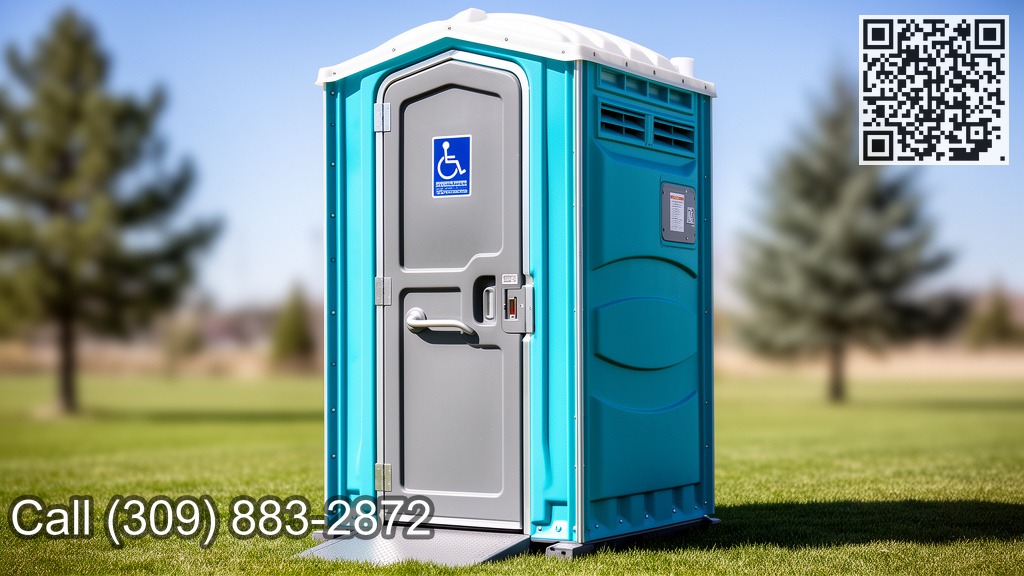
A certified unit is not enough if the course fails
The regulating federal criterion for this issue in the United States is the 2010 ADA Specifications for Accessible Design, as applied with the Department of Justice and interpreted by the Gain access to Board. For mobile systems at short-term occasions and similar setups, access is not restricted to the inside of the washroom. The obtainable portable toilet must also be attached by an accessible path and entry. If a ramp or touchdown is required, it has to meet the ADA's technological requirements.
That might appear apparent, however in the field it obtains missed out on all the time due to the fact that path planning typically occurs late. Somebody picks the commode bank location based upon solution vehicle access, occasion flow, fence, or offered open room. Only after that do they think of the ada portable toilet. Already, the most convenient spot might currently be the worst spot for accessibility.
An ada compliant portable bathroom is expected to function as component of a full customer experience. An individual must have the ability to approach it, enter it, use it, and leave it without running into barriers that the requirement is suggested to eliminate. If the course is broken, the restroom is functionally broken too.
What the ADA actually expects in this setting
For clusters of mobile single-user bathroom units, a minimum of 5 percent of the systems in each collection need to be accessible. The Gain access to Board has explained that this uses even at short-term occasions. That point matters since some coordinators still presume short-term ways flexible. Short-term does not imply excluded here.
The accessible system need to be related to the International Icon of Accessibility. Inside and at the entry, the toilet space still has to fulfill appropriate technological demands. Those consist of turning space, fixture clearances, door steering clearances, and the relevant grab-bar and water-closet clearance guidelines. To put it simply, an ada-compliant portable bathroom is not just a wider covering. It is a device made around real use by people with disabilities.
And still, even that is not the full story. The path to the device and the entrance right into it are part of the need. That is what transforms a compliant tool into a certified installation.
There is one nuance worth keeping in mind because it triggers confusion. The ADA requirements have actually historically treated some mobile commode devices at building sites in different ways when those systems are made use of exclusively by construction workers. That slim difference should not be extended past its facts. For general mobile bathroom rentals, consisting of public events and comparable short-term setups, the accessible-unit requirement continues to be securely in place.
Why obtainable courses are where good purposes fail
Most accessibility errors with mobile commodes do not come from open negligence. They come from fragmented preparation. One team manages site design. Another deals with leasings. An additional deals with operations. Nobody possesses the route from the drop-off indicate the door.
That route can fall short in refined ways. A placement may look close on a map yet be separated by uneven ground. A path may practically exist however force somebody to strategy from the side or navigate around jampacked challenges. An entrance may be obtainable just by crossing a change that functions penalty for foot web traffic yet not for a wheelchair user. A ramp may be included with great intentions yet without the landings or technological compliance the ADA requires.
These are not little information. They are the difference in between accessibility and exclusion.
There is also a human side that frequently gets shed in compliance talk. If a visitor, guest, employee, or member of the family has to request help simply to reach the restroom, the issue is currently larger than logistics. Toilet access is standard, exclusive, and time-sensitive. Individuals must not have to bargain for it, wait on somebody to relocate barriers, or search for a team member that recognizes where the "special system" was placed.
The course is part of dignity
That might seem like soft language for a technological problem, however it is not. Self-respect is what the technical guidelines protect.
Think regarding the difference in between these two setups.
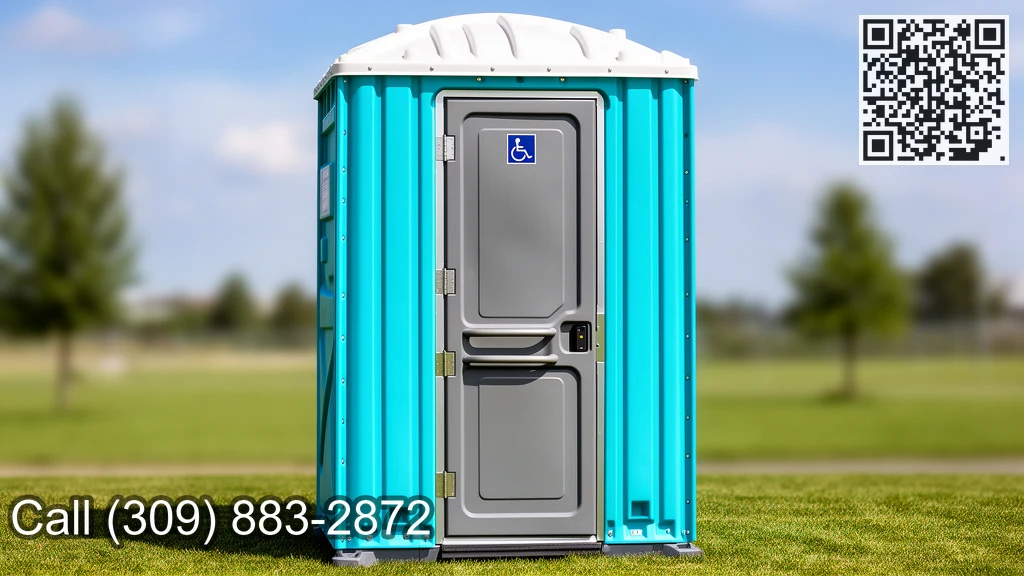
In the first, an ada handicap easily accessible mobile restroom is placed next to the main financial institution of devices, on a route individuals are currently using, with the entryway reachable without added aid. It is recognized properly, easy to discover, and integrated into the website like any kind of various other important service.
In the 2nd, the ada portable bathroom is available just if a person goes across a harsh momentary surface area, goes around the rear of a fenced area, and comes close to an entrance from an unpleasant angle. There may be a certified model on site, but the individual who needs it is still being separated from everyone else.
The law addresses access, yet people experience inclusion.
Temporary occasions do not get a pass
One of one of the most consistent myths in portable hygiene is that temporary setups are somehow judged by a looser requirement. They are https://jaidencbpy620.currentvale.com/posts/ada-certified-portable-bathroom-rental-what-the-2010-requirement-require not, a minimum of not in the basic feeling several coordinators assume. The Access Board's guidance makes clear that the 5 percent accessible-unit demand for collections applies even at momentary events.
That has functional repercussions. A weekend break festival, a community charity event, a fair, a pop-up activation, a momentary venue expansion, or an exterior event still needs to consider obtainable placement. Brief period does not get rid of the demand for an available route. If anything, temporary sites demand even more interest due to the fact that they are more likely to be assembled swiftly on imperfect ground with improvised flow patterns.
I have located that temporary websites are additionally where access obtains treated as a late-stage adjustment. Someone understands the day prior to opening that they need an ada certified mobile bathroom leasing, so the supplier sends out one, and everybody thinks the issue is fixed. Then, however, the site format may already be repaired. The accessible unit ends up in whatever space is left.
That is a preparation failure, not an item failure.
What renters and website managers should verify before placement
If you are organizing ada certified portable restrooms, the crucial inquiry is not just "Did we rent the ideal device?" It is "Can a person in fact get to it and use it under real conditions?"
A short pre-placement check generally captures the most significant mistakes:
- Confirm the amount of systems remain in each collection and whether at least 5 percent of that collection will certainly be accessible.
- Make sure the available system is clearly identified with the International Symbol of Accessibility.
- Walk the route to the entryway, not simply the drop area, and look for barriers that would interrupt obtainable travel.
- If a ramp or touchdown is needed, treat it as an ADA compliance product, not an improvised add-on.
- Verify that the unit's entrance and indoor conditions support the called for maneuvering and clearances.
That listing seems simple because it is easy. The challenge is doing it early enough that positioning can still be changed.
Clusters matter greater than many individuals realize
The requirement relates to each collection of mobile single-user commode units, not just to the overall number rented out across a whole event or site. That information issues in the field due to the fact that coordinators often spread systems right into different banks for convenience.
Imagine an event with numerous toilet areas. If there is one huge main cluster and a few smaller sized satellite clusters, access can not be solved by filling all easily accessible devices into the major location while leaving the smaller collections without accessibility. The 5 percent rule uses at the collection degree. Also without obtaining shed in math, the takeaway is clear: each organizing needs its very own access review.
This is just one of those concerns that has a tendency to surprise individuals who assumed a sitewide total amount sufficed. It commonly is not.
The inside demands are not optional details
There is a tendency in rental discussions to make use of terms like ada mobile washroom and ada-compliant portable bathrooms as if they just explain a larger version. The ADA standards are a lot more specific than that.
The device need to satisfy suitable toilet-room technological demands. That consists of turning area, fixture clearances, door navigating clearances, and suitable guidelines for grab bars and water-closet clearances. These are not aesthetic attributes. They impact whether the individual can place, move, and operate the space.
That issues when a client shops on tag alone. Not every huge portable commode is always an ada compliant mobile commode. Not every system promoted delicately as easily accessible will please the technical needs that govern certified setups. The distinction is very easy to miss if the discussion is driven entirely by inventory names as opposed to actual compliance needs.
This is why seasoned customers have a tendency to ask more difficult concerns. They would like to know not simply what the unit is called, however whether it is being provided and set up in a manner that lines up with ADA requirements.
The path outside the door typically determines whether the system works at all
A portable unit can be totally certified as produced and still stop working the individual as a result of where and just how it is put. That is the unpleasant fact in several access disputes.
The course can damage down before a person even reaches the entryway. The entrance can damage down if technique space is jeopardized. A ramp can break down if it exists in name just but does not please technical requirements. When that happens, it does not matter how good the interior turning area is. The user is quit previously those features become relevant.
I have seen teams focus heavily on the spec sheet and virtually not on technique problems. That is reasonable because item requirements are simple to paper. Path functionality calls for judgment, website recognition, and in some cases a determination to challenge a convenient format. Yet if you are trying to give a genuinely usable ada certified easily accessible portable bathroom, that effort is nonnegotiable.
Accessibility is entering into a more comprehensive compliance culture
There is a broader context below also. ADA compliance is not shrinking right into a particular niche issue. It is becoming more visible across industries, consisting of digital accessibility and civil service distribution. Recent federal assistance impacting internet and mobile availability deadlines for state and city government entities is one sign of that wider environment. The specifics of digital compliance are different from portable hygiene, but the practical lesson is comparable: ease of access assumptions are energetic, progressing, and increasingly hard to deal with as an afterthought.
For site operators, venue managers, districts, institutions, and occasion manufacturers, that should be a wake-up telephone call. Ease of access is no longer something you attend to just when someone complains. It is part of liable procedures. When people search for an ada portable toilet rental, they are usually trying to resolve greater than a purchase problem. They are attempting to satisfy a legal responsibility and a fundamental criterion of care.
Common judgment calls that are entitled to even more attention
Not every website is simple. Some places are constricted, sloped, crowded, or short-lived in a way that makes every placement incomplete. That is specifically why judgment matters.
Here are a couple of scenarios where seasoned preparation makes a distinction:
- A device positioned near service accessibility may be much easier to preserve, but if that path is less accessible for customers, comfort for pumping needs to not instantly win.
- A remote edge might really feel less visually invasive, yet relocating the ada accessible mobile washroom away from the main blood circulation can create isolation and path problems.
- A final ramp may appear like a fix, but if it does not abide by ADA technological demands, it can create incorrect confidence instead of access.
- Spreading devices equally around a site can aid crowd control, but each cluster still requires its own accessible thinking.
- Labeling an unit as easily accessible assists people discover it, yet signage can not compensate for a hard to reach path.
What stands apart in these cases is that access hardly ever fails due to the fact that no one cared. It stops working due to the fact that one more priority quietly overrode it. Solution, aesthetics, crowd circulation, protection, or speed took the lead, and accessibility obtained squeezed right into whatever area remained.
Language matters, however efficiency matters more
The market utilizes a great deal of overlapping expressions: ada compliant portable toilets, ada-compliant portable washrooms, ada certified easily accessible portable toilets, ada portable restroom, ada-compliant mobile commode. A lot of consumers are simply trying to find the best point, and search language has a tendency to blur distinctions. That is normal.
But the best means to think about it is this: the phrase needs to describe a toilet configuration that in fact functions under ADA regulations, not simply a version name in a catalog. A certified setup consists of the best variety of easily accessible devices in each cluster, appropriate recognition, the required interior and entryway conditions, and an accessible path. Exclude any of those items and the phrase begins to lose its meaning.
That is why accessible routes deserve a lot interest. They are typically the least noticeable component of the setup procedure and one of the most definitive part of the customer experience.
Planning early is the simplest form of compliance
If there is one practical lesson I would certainly continue any organizer, it is to deal with ease of access prior to the website plan sets. As soon as fence, vendor booths, stages, solution lanes, and crowd channels are fixed, the restroom area comes to be much more difficult to correct. Early intending provides you choices. Late preparing gives you compromises.
This is especially real when numerous collections are entailed. It is a lot easier to create each toilet location with availability in mind than to retrofit one accessible unit into a site that was set out for speed alone. When teams do this well, it barely feels dramatic. The obtainable restroom is present, plainly marked, and obtainable. Nobody has to improvisate. No one needs to apologize.
That is just how it should feel.
The real examination is simple
An individual approaching an ada compliant portable bathroom need to not need to wonder whether the course is indicated for them. They should not have to ask approval, wait for support, or try a path that others can bypass with ease. If the unit is really easily accessible, the path will say so prior to the sign does.
That is the heart of this issue. An ada certified mobile bathroom leasing is not just regarding purchasing the appropriate device. It has to do with positioning that system where accessibility is actual. The criteria identify that truth. Excellent drivers do as well. And for the people who rely on those bathrooms, the distinction is prompt, practical, and deeply personal.
 Ask ChatGPT
 Ask Grok
 Ask Perplexity
 Ask Claude
 Ask Google AI
 Ask You
Corrections
Spot something wrong? Send it to the desk and it gets fixed in the open.